


![' . esc_attr($image['alt']) . '](https://desal.ita.com.au/wp-content/uploads/2026/03/SDP-External-Plant-14-00108423xCE34F.jpg)
Celebrating World Water Day 2026 – From ocean to tap – where Sydney Desalination Plant fits into Sydney’s water story
When Sydney turns on the tap, most people don’t think about the journey water takes to get there. But that journey matters.
On World Water Day 2026, we’re celebrating the value of safe, reliable drinking water and the infrastructure, and people, that help keep it flowing.
This year’s theme, “Where water flows, equality grows,” is focused on the deep connectivity between water and gender equality. Around the world, when water is unsafe or hard to access, women and girls are often most affected.
That’s why water security matters. It supports health, dignity, resilience and opportunity.
The United Nations is calling for us to centre women and girls in water solutions, not only as users but as leaders, engineers, scientists and changemakers.
The people behind the Sydney Desalination Plant
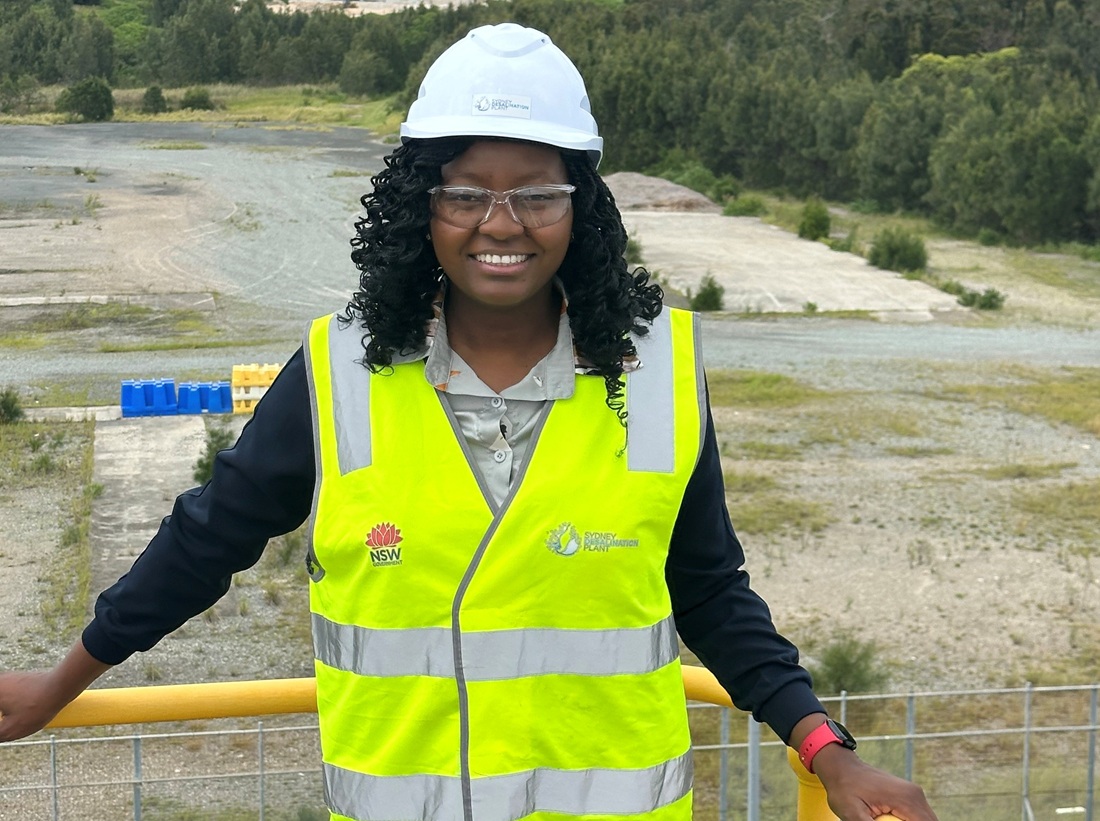
Earlier this year, we shared the story of our very own Rumbidzai Shamhu in our blog.
Rumbi is one of the engineers helping ensure the Sydney Desalination Plant remains reliable, safe and ready to support Sydney’s water supply when needed.
She encourages young people to get involved in engineering, commenting on how women and girls should consider careers in water infrastructure: “It’s meaningful work. You’re contributing to something essential while enhancing your technical skills, leadership, and problem-solving in a tangible, real-world environment. There is space for different strengths, different pathways, and the opportunity to continuously learn and grow while working on projects that truly matter.”
Her story also reflects an important part of this year’s World Water Day message. Women are helping lead the solutions to water security as engineers, operators and decision-makers around the world.
So, this year, we ask everyone in our community – what does water equality mean to you? And what can you do to make a difference?
So, where does the Sydney Desalination Plant fit in?
The United Nations highlights the importance of water services being built to withstand climate change and meet everyone’s needs.
In Sydney, it takes a connected network to make that happen.
Most of Sydney’s drinking water comes from the city’s network of dams, where rainwater is collected, treated and supplied through Sydney Water’s distribution network.
The Plant plays a different but critical role in diversifying the system to protect Sydney’s water source from climate related uncertainty.
Located at Kurnell in southern Sydney, the Sydney Desalination Plant is Sydney’s only major rainfall-independent source of drinking water. Instead of relying on rainfall and dam catchments, the Plant draws on a secure source that is always available, the ocean.
SDP can produce up to 15% of Sydney’s drinking water needs, helping support the wider water network during periods of drought, extreme weather, water quality challenges, or planned maintenance elsewhere in the system.
From ocean to tap: how it works
Here’s the water journey in simple terms:
- Seawater is sourced from the Tasman Sea off the coast of Kurnell
- The seawater is desalinated and treated to drinking water quality
- It is then transferred via an 18km pipeline under Botany Bay
- The water enters the Sydney Water network at Erskineville
- From there, it is blended with other drinking water supplies and delivered to homes and businesses across Sydney
Why rainfall-independent supply matters
Sydney is growing, and water networks everywhere are under pressure from population growth, climate change and more extreme weather events.
That makes resilience more important than ever.
Because the Sydney Desalination Plant operates in a fully flexible arrangement with Sydney Water, it can increase production when needed and help reduce pressure on other parts of the system.
That flexibility gives Sydney another dependable source of high-quality drinking water, one that doesn’t depend on rainfall.



Related Posts
Frequently Asked Questions
- Is the Sydney Desalination Plant operating?While the Plant was originally designed to operate only in times of drought, it has remained operational since 2019 to help address several storage dam water quality issues arising from bushfires, flooding and significant maintenance tasks in Sydney Water’s supply network.
The Sydney Desalination Plant’s WICA Network Operator’s Licence enables the Plant to remain operational, recognising that the Plant has always been, and will continue to be, an essential component of Sydney’s water management and an integral part of our city’s water-resilient future. - How much water does the Plant produce?The Plant can provide up to 15 per cent of Sydney’s average drinking water needs without any reliance on rainfall.
It treats, filters and re-mineralises seawater to produce up to 91.25 gigalitres per annum of high-quality drinking water.
Under our WICA Network Operator’s Licence, the Plant will operate on a “flexible full-time basis”, producing between about 20 gigalitres to 91.25 gigalitres every year. - What does desalinated water taste like?Sydney Desalination Plant water is treated to taste the same as Sydney’s other drinking water.
Like dam water, water from the desalination plant is treated to meet Australian Drinking Water Guidelines, which makes it among the best in the world. - Who owns the Plant?Sydney Desalination Plant is owned by Utilities Trust of Australia, which is managed by Morrison.
Utilities Trust of Australia is an Australian open-ended core infrastructure fund for institutional investors with a long-term investment horizon.
Find out more on our About Us page.
- Why is desalination important?The Sydney Desalination Plant is Sydney’s only major sources of non-rainfall dependent drinking water. It is one effective way of securing Sydney’s water supply against the effects of climate change and natural disasters and the increase in demand due to population growth, warmer weather and urban greening projects.
While the Plant was originally designed to respond to Australia’s severe millennium drought, recent experiences have demonstrated that drought is only one type of event that requires support from the Plant to ensure clean and safe drinking water for Greater Sydney.
The Plant has been a reliable drinking water supply during floods and bushfires, which caused water quality challenges from time to time in Sydney’s storage dams. - Where does the water go?The Plant can supply water to homes and businesses south of Sydney Harbour and as far west as Bankstown, as part of all their water supply.
Sydney Water uses a variety of water sources to supply customer needs. Where your water comes from depends on demand and where in Sydney you live.
If you live in the blue-shaded area on this map, you may receive water from the dams, the Sydney Desalination Plant or a combination of both. The Plant's water proportion will change throughout the day due to variations in supply and demand.
Everyone will benefit from desalination because it allows more water to be left in the dams, which means a more secure water supply for Sydney. - How much energy does the Plant use?The Sydney Desalination Plant requires roughly 38 megawatts at full production and is 100 per cent powered by renewable energy.
The average energy needed to provide drinking water to one household is about the same as the energy used to run a household fridge. - What’s the impact on the environment?Sydney Desalination Plant places a high priority on minimising any environmental impacts – both on land and in the water.
To support this, the Plant has put in place a world first stringent six-year marine environment monitoring program. The marine environment was monitored for three years before construction and three years after the Plant became operational. It demonstrated that the Plant has minimal effect on the marine environment.
On land, a third of the Plant site at Kurnell has been maintained as a conservation area. This area is protected, and native species of flora and fauna are regularly monitored. This includes a program to survey the numbers of grey-headed flying foxes and green and golden bell frogs in the area.