


![' . esc_attr($image['alt']) . '](https://desal.ita.com.au/wp-content/uploads/2026/05/Intake-in-operation1.jpg.jpg)
How the Sydney Desalination Plant protects the ocean while securing clean, reliable drinking water
Clean reliable drinking water is at the heart of Sydney Desalination Plant’s mission. But just as important as water security is how that drinking water is made and the care taken to protect the marine environment.
For the Sydney Desalination Plant, there is no simple trade-off between reliable drinking water and ocean stewardship. With the right design, planning and monitoring, the two can work together.
Designed to minimise ocean impact
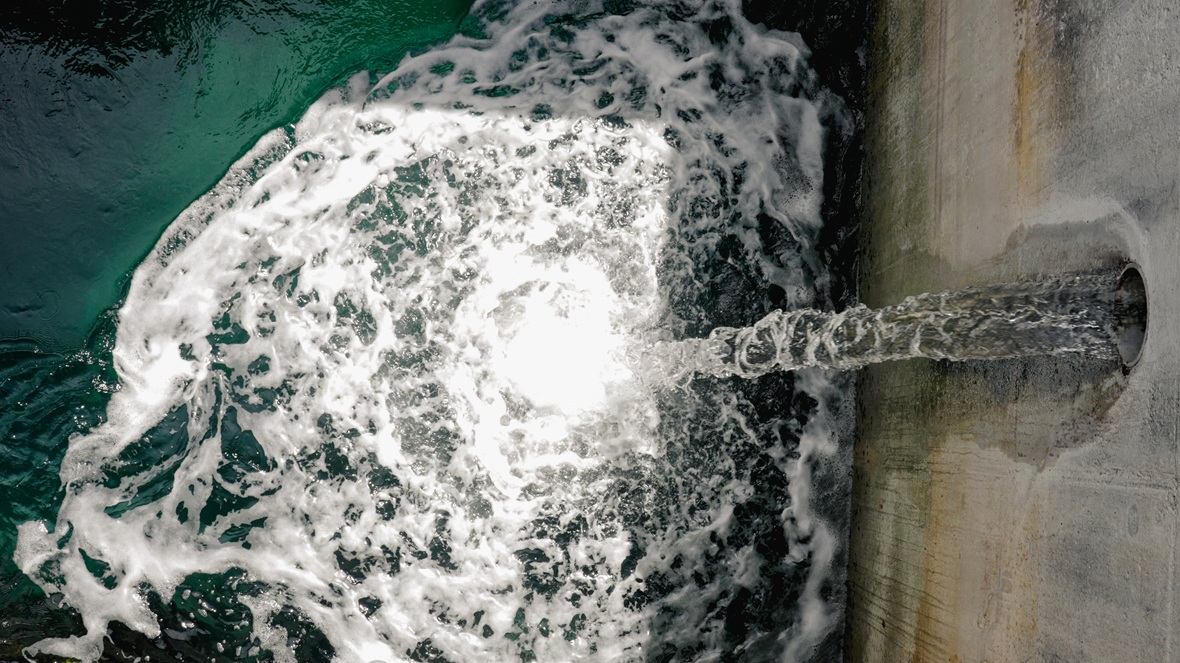
As part of the desalination process to produce high quality drinking water, seawater is pushed through reverse osmosis membranes at high pressure to separate fresh water from the salts. The portion of seawater that doesn’t become drinking water, around 58 per cent, is returned to the ocean as brine or seawater concentrate. This is simply seawater with a higher salt content because the freshwater has been removed. The brine is carried back to the ocean through an outlet tunnel and released via specially designed dispersion nozzles that rapidly dilute it back to normal seawater levels.
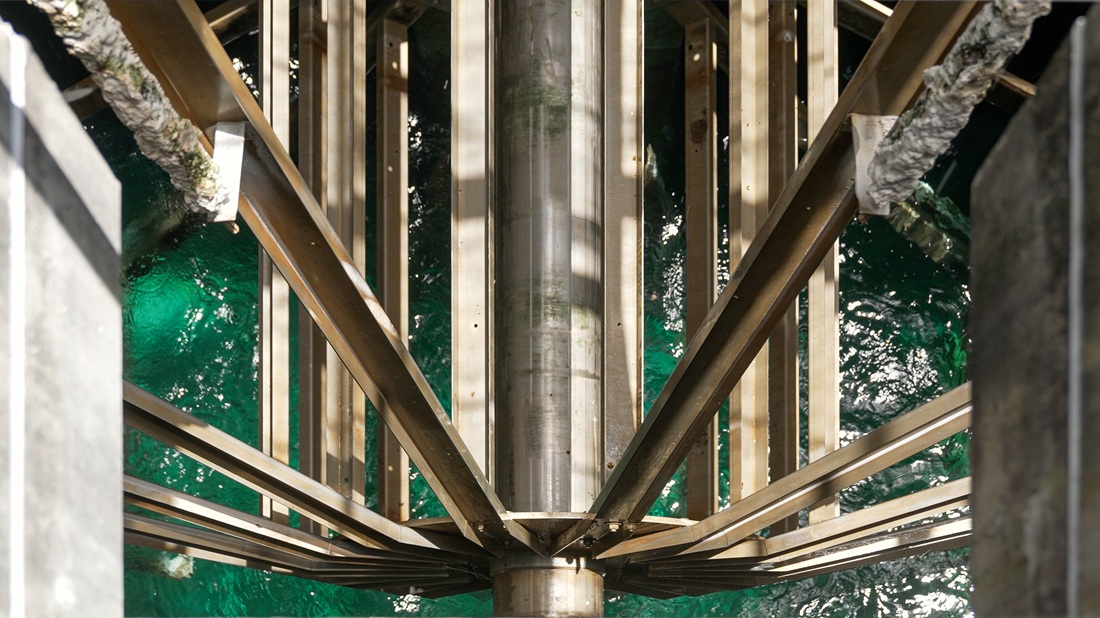
A key part of the Sydney Desalination Plant’s approach to minimise the impact on the ocean is its multi-port diffuser system, which returns brine back to the ocean in a way that promotes rapid mixing and dilution.
What makes the diffuser design so important is the way it works: it is built to maximise mixing and dilution as quickly as possible.
The diffuser system uses two key design features:
- Small-diameter nozzles, which force the brine to exit at high speed
- Eight nozzles on each of the two diffusers, which spread the discharge in multiple directions
This combination helps the brine mix rapidly with surrounding seawater rather than remaining concentrated in one place, reducing the chance of concentrated brine discharge settling on the seabed.
Before construction, extensive environmental studies were carried out along the Kurnell coast to help determine the best location and design for the outfall. That science-based planning is one of the reasons the Plant has been able to operate with a strong focus on environmental performance.
What “minimal impact” means in practice
The Plant operates under a strict environmental protection license from the NSW Environmental Protection Authority. This requires monitoring of key water quality parameters including salinity, pH, chlorine and suspended solids to ensure the Plant stays within its design limits.
Just as importantly, the Sydney Desalination Plant also carried out a six-year independent marine monitoring programme, undertaken by The University of NSW with a team that included scientists from NSW Fisheries Research and Southern Cross University, when it first operated. This was a first-of-its-kind study that tracked the local marine environment before, during and after plant operation. The programme focused on rocky reef habitats and marine invertebrates.
The findings were reassuring. Overall biodiversity was maintained and the Plant’s operation had no significant impact on the local marine environment.
A responsible approach to water security
As climate change increases pressure on water supplies, desalination plays an important role in helping secure drinking water for Sydney. The Sydney Desalination Plant’s experience shows that desalination can be delivered responsibly when it is designed, operated, and monitored with the marine environment in mind from the very beginning.
The result is a plant that supports Sydney’s water resilience while continuing to demonstrate strong environmental stewardship.



Related Posts

Frequently Asked Questions
- Is the Sydney Desalination Plant operating?While the Plant was originally designed to operate only in times of drought, it has remained operational since 2019 to help address several storage dam water quality issues arising from bushfires, flooding and significant maintenance tasks in Sydney Water’s supply network.
The Sydney Desalination Plant’s WICA Network Operator’s Licence enables the Plant to remain operational, recognising that the Plant has always been, and will continue to be, an essential component of Sydney’s water management and an integral part of our city’s water-resilient future. - How much water does the Plant produce?The Plant can provide up to 15 per cent of Sydney’s average drinking water needs without any reliance on rainfall.
It treats, filters and re-mineralises seawater to produce up to 91.25 gigalitres per annum of high-quality drinking water.
Under our WICA Network Operator’s Licence, the Plant will operate on a “flexible full-time basis”, producing between about 20 gigalitres to 91.25 gigalitres every year. - What does desalinated water taste like?Sydney Desalination Plant water is treated to taste the same as Sydney’s other drinking water.
Like dam water, water from the desalination plant is treated to meet Australian Drinking Water Guidelines, which makes it among the best in the world. - Who owns the Plant?Sydney Desalination Plant is owned by Utilities Trust of Australia, which is managed by Morrison.
Utilities Trust of Australia is an Australian open-ended core infrastructure fund for institutional investors with a long-term investment horizon.
Find out more on our About Us page.
- Why is desalination important?The Sydney Desalination Plant is Sydney’s only major sources of non-rainfall dependent drinking water. It is one effective way of securing Sydney’s water supply against the effects of climate change and natural disasters and the increase in demand due to population growth, warmer weather and urban greening projects.
While the Plant was originally designed to respond to Australia’s severe millennium drought, recent experiences have demonstrated that drought is only one type of event that requires support from the Plant to ensure clean and safe drinking water for Greater Sydney.
The Plant has been a reliable drinking water supply during floods and bushfires, which caused water quality challenges from time to time in Sydney’s storage dams. - Where does the water go?The Plant can supply water to homes and businesses south of Sydney Harbour and as far west as Bankstown, as part of all their water supply.
Sydney Water uses a variety of water sources to supply customer needs. Where your water comes from depends on demand and where in Sydney you live.
If you live in the blue-shaded area on this map, you may receive water from the dams, the Sydney Desalination Plant or a combination of both. The Plant's water proportion will change throughout the day due to variations in supply and demand.
Everyone will benefit from desalination because it allows more water to be left in the dams, which means a more secure water supply for Sydney. - How much energy does the Plant use?The Sydney Desalination Plant requires roughly 38 megawatts at full production and is 100 per cent powered by renewable energy.
The average energy needed to provide drinking water to one household is about the same as the energy used to run a household fridge. - What’s the impact on the environment?Sydney Desalination Plant places a high priority on minimising any environmental impacts – both on land and in the water.
To support this, the Plant has put in place a world first stringent six-year marine environment monitoring program. The marine environment was monitored for three years before construction and three years after the Plant became operational. It demonstrated that the Plant has minimal effect on the marine environment.
On land, a third of the Plant site at Kurnell has been maintained as a conservation area. This area is protected, and native species of flora and fauna are regularly monitored. This includes a program to survey the numbers of grey-headed flying foxes and green and golden bell frogs in the area.